

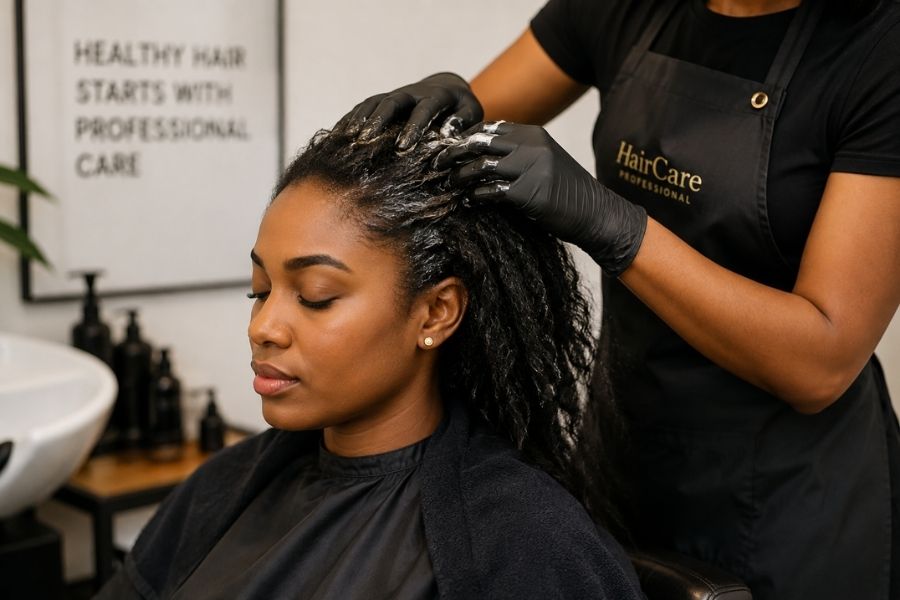
If your hair has been feeling dry, difficult to manage or just not looking its best, it may be time to give it some extra attention. It’s easy to keep reaching for a new shampoo or conditioner hoping something will finally fix the problem, but sometimes what your hair actually needs isn’t a different product, it’s a proper professional treatment.
Let’s look at the signs your hair may be asking for help, what usually causes them, and how steaming and other professional treatments can make a real difference.
Signs Your Hair Needs Professional Attention
Hair usually gives you warning signs long before things get serious. Here are a few of the most common ones:
- Persistent dryness that doesn’t improve no matter how much oil or moisturiser you apply.
- Excessive shedding or breakage, especially around the edges or ends.
- A dull, lifeless appearance even right after washing.
- Hair that tangles or knots easily, making it hard to comb through.
- Slow or stunted growth, or hair that seems to stay the same length no matter what.
- Product build-up that leaves hair feeling heavy, greasy or coated.
- An itchy, flaky or irritated scalp, which can be a sign the scalp needs care too, not just the hair strands.
If any of these sound familiar, it’s worth looking a little deeper into what might be causing it, rather than just changing products again.
What Usually Causes These Issues?
There’s rarely just one reason hair starts to struggle. More often, it’s a combination of everyday habits and environmental factors building up over time.
- Heat styling from blow-drying, straightening or curling without adequate protection.
- Chemical processes such as colouring, bleaching or relaxing, which can weaken the hair structure over time.
- Weather and climate, particularly the dry harmattan season here in Lagos, which can strip moisture from both hair and scalp.
- Tension from extensions, wigs or tight styles worn for long periods without breaks.
- Using the wrong products for your specific hair type or texture.
- Internal factors like stress, diet and hormonal changes, which often show up in the hair before anywhere else.
Because there are usually several factors at play, a one-off deep conditioning mask at home often isn’t enough to reverse the damage. This is where a proper professional treatment comes in.
What Is Hair Steaming and How Does It Help?
Hair steaming is one of the most effective treatments for dry, damaged or low-porosity hair, and it’s a treatment we use often at the salon. During steaming, warm, moist heat is applied to the hair and scalp, which gently lifts the hair cuticle.
Once the cuticle is lifted, moisture and any treatment products applied beforehand, such as a deep conditioner or protein mask, can penetrate much deeper into the hair shaft than they would at room temperature. This is especially helpful for:
- Low porosity hair, which naturally resists moisture and needs extra help absorbing products.
- Colour-treated or chemically processed hair, which tends to be more porous and prone to dryness.
- Natural hair that struggles with moisture retention and shrinkage.
The result is hair that feels noticeably softer, more elastic and easier to manage, often after just one session.
Other Professional Treatments That Can Help
Steaming is often paired with, or is part of, a broader treatment depending on what your hair needs. A few other treatments worth knowing about include:
- Protein treatments, which help rebuild strength in weak, over-processed or breaking hair.
- Deep conditioning masks, which restore moisture and softness to dry or brittle strands.
- Scalp treatments, which address build-up, dryness or irritation at the root, where healthy hair actually starts.
- Hot oil treatments, which nourish the hair and add shine while sealing in moisture.
- Regular trims, which prevent split ends from travelling further up the hair shaft and causing more damage.
A good stylist won’t just pick one of these at random, they’ll look at your hair’s condition, porosity and history to decide which combination will actually get results.
DIY Care vs Professional Treatment: Why the Difference Matters
There’s nothing wrong with a good home hair care routine, and in fact, it’s an important part of keeping your results between salon visits. But there are a few key differences that make professional treatments worth it every so often:
- Proper diagnosis. A stylist can identify whether your hair actually needs moisture, protein, or both, something that’s easy to get wrong at home.
- Salon-grade equipment. Steamers and professional-strength treatments penetrate far more effectively than at-home alternatives.
- Consistent, measurable results. A treatment plan tailored to your hair type tends to produce more noticeable, longer-lasting improvement than trial and error.
Think of it the same way you would a skincare routine: your daily products keep things maintained, but every so often, a proper professional treatment is what actually resets and repairs.
How Often Should You Get a Treatment?
This depends on your hair type, how it’s styled day to day, and how it’s currently holding up. As a general guide, hair that’s regularly coloured, heat-styled or kept in protective styles tends to benefit from a treatment every four to six weeks. Hair that’s in generally good condition may only need one every couple of months as general maintenance.
If you’re noticing several of the warning signs mentioned earlier, it’s a good idea to come in sooner rather than waiting, the earlier damage is addressed, the easier it is to reverse.
Give Your Hair the Attention It Deserves
If your hair has been trying to tell you something, it’s worth listening. Our team can assess your hair’s condition and recommend the right treatment, whether that’s steaming, a deep conditioning mask, a protein treatment or a combination. Book an appointment or explore our hair treatment services to get started.
And if it’s your wig or install that needs some care rather than your natural hair, take a look at our tips on making your wig last longer or when it might be time for a revamp.